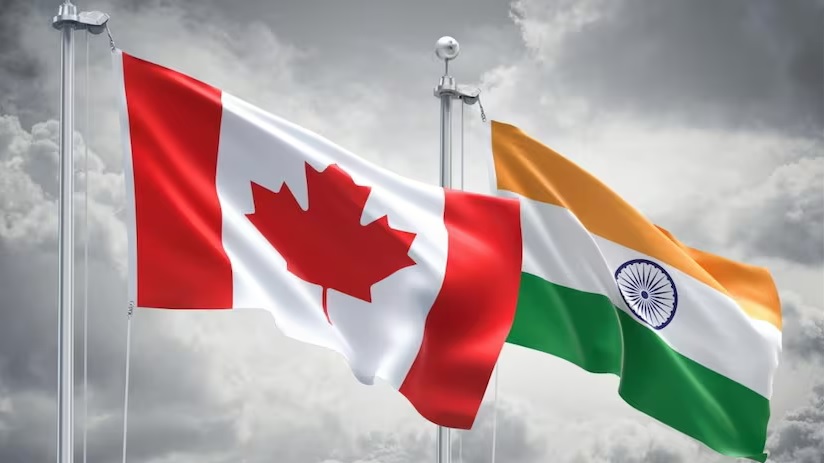
In the past months, diplomatic tensions have increased between India and Canada as a result of the recidivism of Khalistan terrorism and the allegations made about the slaying of Khalistan terrorist, Hardeep Singh Nijjar on Canadian soil. With Canadian Prime Minister Justin Trudeau making a surprising public announcement about the situation, more attention from the public has been placed on recent incidents.
Canadian Prime Minister Justin Trudeau Courtesy: Benhur Arcayan
Public Interest and Concerns about Khalistan Terrorism in Canada
Canadian PM Justin Trudeau made a public announcement that local authorities suspect India played a role in the killing of Sikh separatist leader Hardeep Singh Nijjar. The incident happened outside of a temple in Surrey, British Columbia, on 18 June 2023, where Nijjar, a leader within the Sikh diaspora in Canada, was shot dead at the age of 45. He had been an active supporter of the Khalistan Separatist movement in Northern India, which is aiming to create an independent Sikh homeland in the region.
Increasing tensions further, the Indian Prime Minister, Narendra Modi, confronted Trudeau about “anti-India activities” among Sikh separatists in his country. These individuals typically favour creating an independent state within both India and Pakistan’s Punjab Region. There is concern about violence against Hindus living in Canada as a result of this.
Canadian and Indian Diplomats Step in and Step out
Both Canada and India have now expelled diplomats as a repercussion to calm down the situation. India has now stopped offering visas to citizens of Canada, which has one of the world’s largest Sikh-majority Indian diasporas. It’s estimated that 700,000 Indian citizens and 1.6 million people of Indian descent reside within the country, restricting many of them from visiting loved ones back home. Both countries stated recently that their diplomats have been the subject of security threats, with India dismissing Canada’s accusations of involvement in the killing as “absurd”.
Global Contextual Consequences
Back in March, Prime Minister Modi’s administration shared their concerns about pro-Khalistan protestors when the Indian High Commission in London was vandalised in a demonstration, encouraging the British government to deal with these extremist attacks in a more severe manner. This has now become a global concern, with the UK Home Office adding a further £95,000 to funding to tackle the issue of “pro-Khalistani extremism”. Recently, British Prime Minister Rishi Sunak lambasted pro-Khalistani extremism stating that he would not tolerate any form of extremism and violence like that in the U.K.
Indian Army Lieutenant General Kuldeep Singh Brar
In 2014, retired Indian Lieutenant General Kuldeep Singh Brar was visiting London and was attacked and slashed by a knife, leaving a 12-inch cut running across his neck and jaw.
These incidents have been continuing for many years now, dating back to 1984 when General Brar led Operation Blue Star, the Indian Army mission to capture Sikh militant Jarnail Singh Bhindranwale (in a similar mission to Operation Neptune Spear, the U.S. CIA-led mission to capture al-Qaeda Leader, Osama Bin Laden) resulting in the Indian army attacking the Golden Temple in Amritsar. Indian Prime Minister Indira Gandhi was assassinated by her 2 Punjabi Sikh bodyguards four months later in the country’s worst act of treason to date.
Tableau depicting Indira Gandhi’s brutal assassination was part of a parade on 7 June 2023 in Brampton, Canada
Anti-Sikh riots across India followed, resulting in thousands of deaths. On June 23, 1985, Khalistan Terrorists boarded and detonated a bomb on Air India Flight 182 en-route from Toronto to London, England, killing all 329 people on board, including 268 Canadian citizens, 27 British citizens, and 24 Indian citizens. To this day, the Air India Flight 182 bombing is still the worst terrorist attack in Canadian history.
Tensions only continue to rise between Canada and India at the current time, with no clear indication of what will happen in the near future. With a long history of contextual conflicts between India and other countries such as Canada, U.K. and Australia, it is hoped that these incidents will decrease in the future and that appropriate action to eliminate Terror will be taken where necessary to avoid future conflict.
One contextual way is for more educated metropolitan population areas not allow those from a “small town,” rural and regional farming areas, whom are usually responsible for the most hard-line political and religious views, to become so overwhelmingly dominant in a nation’s politics, foreign affairs and commercial industries.
Juni Media unequivocally condemns both Canada’s and Australia’s two-facedoligarchs, for their overwhelming support for proven terrorist groups and organisations at the expense of victims, diplomacy, global safety and security.


 juni
juni 
OPINION |
In the past months, diplomatic tensions have increased between India and Canada as a result of the recidivism of Khalistan terrorism and the allegations made about the slaying of Khalistan terrorist, Hardeep Singh Nijjar on Canadian soil. With Canadian Prime Minister Justin Trudeau making a surprising public announcement about the situation, more attention from the public has been placed on recent incidents.
Public Interest and Concerns about Khalistan Terrorism in Canada
Canadian PM Justin Trudeau made a public announcement that local authorities suspect India played a role in the killing of Sikh separatist leader Hardeep Singh Nijjar. The incident happened outside of a temple in Surrey, British Columbia, on 18 June 2023, where Nijjar, a leader within the Sikh diaspora in Canada, was shot dead at the age of 45. He had been an active supporter of the Khalistan Separatist movement in Northern India, which is aiming to create an independent Sikh homeland in the region.
Increasing tensions further, the Indian Prime Minister, Narendra Modi, confronted Trudeau about “anti-India activities” among Sikh separatists in his country. These individuals typically favour creating an independent state within both India and Pakistan’s Punjab Region. There is concern about violence against Hindus living in Canada as a result of this.
Canadian and Indian Diplomats Step in and Step out
Both Canada and India have now expelled diplomats as a repercussion to calm down the situation. India has now stopped offering visas to citizens of Canada, which has one of the world’s largest Sikh-majority Indian diasporas. It’s estimated that 700,000 Indian citizens and 1.6 million people of Indian descent reside within the country, restricting many of them from visiting loved ones back home. Both countries stated recently that their diplomats have been the subject of security threats, with India dismissing Canada’s accusations of involvement in the killing as “absurd”.
Global Contextual Consequences
Back in March, Prime Minister Modi’s administration shared their concerns about pro-Khalistan protestors when the Indian High Commission in London was vandalised in a demonstration, encouraging the British government to deal with these extremist attacks in a more severe manner. This has now become a global concern, with the UK Home Office adding a further £95,000 to funding to tackle the issue of “pro-Khalistani extremism”. Recently, British Prime Minister Rishi Sunak lambasted pro-Khalistani extremism stating that he would not tolerate any form of extremism and violence like that in the U.K.
In 2014, retired Indian Lieutenant General Kuldeep Singh Brar was visiting London and was attacked and slashed by a knife, leaving a 12-inch cut running across his neck and jaw.
These incidents have been continuing for many years now, dating back to 1984 when General Brar led Operation Blue Star, the Indian Army mission to capture Sikh militant Jarnail Singh Bhindranwale (in a similar mission to Operation Neptune Spear, the U.S. CIA-led mission to capture al-Qaeda Leader, Osama Bin Laden) resulting in the Indian army attacking the Golden Temple in Amritsar. Indian Prime Minister Indira Gandhi was assassinated by her 2 Punjabi Sikh bodyguards four months later in the country’s worst act of treason to date.
Anti-Sikh riots across India followed, resulting in thousands of deaths. On June 23, 1985, Khalistan Terrorists boarded and detonated a bomb on Air India Flight 182 en-route from Toronto to London, England, killing all 329 people on board, including 268 Canadian citizens, 27 British citizens, and 24 Indian citizens. To this day, the Air India Flight 182 bombing is still the worst terrorist attack in Canadian history.
Tensions only continue to rise between Canada and India at the current time, with no clear indication of what will happen in the near future. With a long history of contextual conflicts between India and other countries such as Canada, U.K. and Australia, it is hoped that these incidents will decrease in the future and that appropriate action to eliminate Terror will be taken where necessary to avoid future conflict.
One contextual way is for more educated metropolitan population areas not allow those from a “small town,” rural and regional farming areas, whom are usually responsible for the most hard-line political and religious views, to become so overwhelmingly dominant in a nation’s politics, foreign affairs and commercial industries.
Juni Media unequivocally condemns both Canada’s and Australia’s two-faced oligarchs, for their overwhelming support for proven terrorist groups and organisations at the expense of victims, diplomacy, global safety and security.
This work is licensed under a Creative Commons Attribution-NonCommercial-NoDerivatives 4.0 International License